


The technical future of IBM i
As of: 11 October 2026
IBM i is one of the longest-lived commercial IT platforms in existence. However, this should not be confused with technological stagnation. Particularly in recent years, IBM has continued to develop the operating system, POWER hardware, the hypervisor, Db2 for i, RPG, development tools, security, high availability and AI support in parallel.
A look into the future also requires a clear distinction between two levels: today, IBM i is the operating system or integrated platform; the underlying hardware is based on the IBM Power processor architecture. Any forecast about the future of IBM i must therefore always consider both roadmaps.
This analysis distinguishes between three types of statements:
Documented denotes developments announced, published or already delivered by IBM
Inference denotes a conclusion derived from several documented developments
Projection denotes a technically plausible development that IBM has not currently announced.
Documented denotes developments announced, published or already delivered by IBM
Inference denotes a conclusion derived from several documented developments
Projection denotes a technically plausible development that IBM has not currently announced.
1. From System/38 and System/36 via AS/400 to IBM i
The actual technical lineage of IBM i begins primarily with IBM System/38. Its architecture already contained core concepts that remain part of IBM i today: an integrated relational database, Single-Level Storage, an object-based operating system and the Technology Independent Machine Interface, or TIMI. TIMI abstracts applications from the specific processor architecture and is an essential prerequisite for allowing programs to continue across multiple hardware generations.1
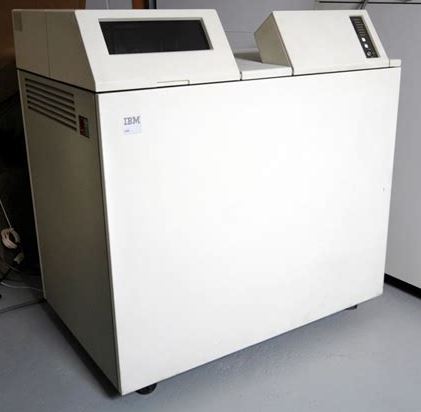
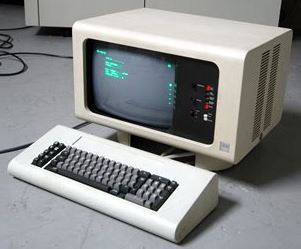
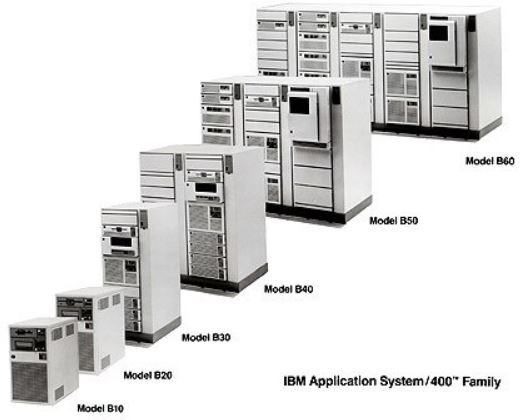
Product names and hardware then changed several times: AS/400 and OS/400 became iSeries, System i and i5/OS, and ultimately IBM i on IBM Power. The remarkable constant was not so much the product name as the architectural principle: applications and data should remain as independent as possible from the specific hardware generation.
Nick Litten has published a short but very concise historical overview of the various generations of the AS/400.
of the various generations of the AS/400.This historical characteristic is more important for the future than the old product names. It explains why IBM continues to evolve the platform without requiring a fundamental restart of applications every few years.
2. The fundamental future of IBM i
Documented
IBM continues to treat IBM i as a strategically developed platform. IBM i 7.6 was announced on 8 April 2025 and has been generally available since 18 April 2025. IBM guarantees an Enhanced Lifecycle Policy for IBM i 7.6 with at least five years of support and an option to extend it by three years.4
Even more significant is the current IBM i roadmap. An IBM Redbook published in 2026 shows a planned support horizon through 2039. In addition to IBM i 7.6, it explicitly lists further generations using the neutral designations "IBM i Next", "IBM i Next + 1" and "IBM i Next + 2". As usual with roadmaps, IBM points out that future plans are subject to change.5
Inference
Based on the currently published product and support planning, discontinuation of IBM i within the next few years is highly unlikely. This is supported not only by the roadmap through 2039, but also by the fact that IBM is simultaneously delivering new operating-system functions, new POWER hardware, new RPG language features, new Db2 functions, modern development tools and AI support.6
Projection
IBM i is also likely to appear in the 2030s not as an entirely new operating system, but as a continuously modernised continuation of the existing platform. Long-term protection of software investments is one of the main economic reasons for IBM i; a radical break with the existing architecture would destroy a major advantage of the system. This assessment is a forecast, not an IBM announcement. However, it is based on IBM's established architectural strategy and the published roadmap.7
3. The next IBM i generation
Documented
In recent releases, IBM has settled into an approximately three-year cycle for major IBM i versions. IBM i 7.4 appeared in 2019, IBM i 7.5 in 2022 and IBM i 7.6 in 2025. IBM itself describes this three-year cadence as the platform's "sweet spot".8
Between major releases, IBM continues to deliver functions through Technology Refreshes and PTF groups. Since 2025, IBM has partly separated Hardware Technology Refreshes and Software Technology Refreshes.9
Inference
If IBM continues its existing cadence, the next major IBM i generation would be plausible around 2028. However, IBM currently refers to this generation only as "IBM i Next". Therefore, neither the designation "IBM i 7.7" nor "IBM i 8.0" should be inferred from it.
The next major version is likely to incorporate changes that reach deeply into the operating system, Licensed Internal Code, security, database or other central components. IBM will continue to deliver smaller and backward-compatible enhancements on an ongoing basis through PTFs and Technology Refreshes.10
Projection
For "IBM i Next", further fundamental security, encryption, high-availability and automation functions are more likely than a completely new user interface or a break with library, object and job concepts. There is no specific IBM announcement to this effect; it is a projection based on the development priorities of IBM i 7.6, TR1 and TR2.11 The version number is more likely to change to 7.7 rather than 8.0. The current V0R0M0 concept does not allow two-digit version numbers. This means that there cannot be a V10.
4. Hardware: Power11 and the generation after it
Documented
Power11 is the current POWER generation. In July 2026, IBM expanded the product range with the Power S1112, an entry system intended for IBM i customers in software tier P05. IBM i 7.6 TR2, IBM i 7.5 TR8 and corresponding IBM i 7.4 PTFs support this system.12
With IBM i 7.6 TR2, IBM also supports new I/O technology such as PCIe Gen5 and a 200 Gbit/s Ethernet RoCE adapter. Under IBM i, RoCE is used in particular for Db2 Mirror.13
At the same time, IBM has publicly explained the intended direction of the POWER processor architecture after Power11. IBM Power Processor Chief Architect William Starke describes a chiplet-based architecture for the period after Power11. IBM sees this as a foundation for several future POWER generations.14
Inference
Future POWER development will be defined less by higher clock speeds alone. More likely is a combination of greater computing power per socket, higher memory bandwidth, more powerful I/O, specialised accelerators, stronger security support and more modular chiplet structures.
For IBM i, this means that the platform can continue to benefit from hardware functions without existing business applications having to be redesigned for every processor change. This is precisely where the historic separation between application and hardware architecture through TIMI continues to have an effect.15
Projection
A future POWER generation after Power11 will very likely integrate further AI and cryptography acceleration. However, its name, performance data and specific release date have not been officially announced. It is therefore too early from a technical perspective to speak of an already established "Power12", even though this designation is already used in some trade media.16
5. New IBM i releases will continue to leave older hardware behind
Documented
IBM i 7.6 supports Power10 and Power11 systems, but no longer Power9 systems. IBM had already specified that IBM i 7.5 would be the final IBM i version with Power9 support. Accordingly, IBM i 7.4 was the final version for Power8.17
Inference
This pattern is likely to continue. Future IBM i versions will not support older POWER generations indefinitely. Increasingly, the reason is not merely computing performance. Secure Boot, new cryptography, firmware functions, faster I/O technologies, NVMe functions, AI acceleration and new virtualisation mechanisms require modern hardware.
The lifetime of an application therefore remains substantially longer than the lifetime of a specific server generation. This separation is also likely to remain a characteristic of IBM i in the future.18
6. Security is becoming one of the central development drivers
Documented
IBM i 7.6 introduced major security enhancements. These include, in particular, stronger integration of Multi-Factor Authentication. With IBM i 7.6 TR2, IBM is already extending these functions further, including MFA support in cluster environments and External Key Management.19
Hardware development is moving in the same direction. Power11 introduces additional security and cyber-resilience functions as well as an architecture prepared for quantum-safe security.20
The market confirms the importance of this topic. In Fortra's 2026 IBM i Marketplace Survey, 64 percent of respondents named cybersecurity as one of their most important topics. At the same time, the shortage of IBM i skills moved into first place among concerns for the first time.21
Inference
Security on IBM i is therefore shifting from a largely static system configuration towards a continuous process. Vulnerabilities must be identified, affected components mapped, PTF levels assessed, keys managed and changes implemented in a traceable manner.
Future tools are likely to automate the chain "detect vulnerability – determine impact – identify required correction – plan change – control implementation" to an increasing degree. This does not make the administrator disappear; the role shifts more strongly towards policy, approval, risk assessment and control.22
Projection
It is plausible that future IBM i releases will consolidate security settings more strongly on a policy basis and detect misconfigurations more actively. A tighter integration of Security Advisory, CVE, PTF planning and the change process is also plausible. However, IBM has not currently announced a fully autonomous IBM i security-management solution.
7. High availability: less planned downtime rather than magical "Zero Downtime"
Documented
IBM strongly promotes Power11 with the goal of "Zero Planned Downtime". A distinction must be made between hardware, operating system and the specific IBM i application. IBM Redbooks explicitly points out that complete Zero Planned Downtime for IBM i remains challenging because hardware, operating system, Db2 and applications are closely interconnected.23
IBM is therefore expanding the methods that can greatly reduce planned interruptions. IBM i Migrate While Active creates and synchronises a target system while production continues on the source system. Maintenance or upgrade work can be prepared on the target; this is followed by a controlled switchover with the shortest possible interruption.24
Further methods were added in July 2026. Under IBM i 7.6, Partition Mirroring is available, among other functions; methods using external storage replication and additional planning and testing capabilities were also expanded.25
Inference
The future is therefore unlikely to be: "A single IBM i system never needs an IPL again." More likely it will be: "A business service should remain available even when an individual system is maintained, migrated or replaced."
Db2 Mirror, PowerHA, Live Partition Mobility, Migrate While Active, storage replication and faster RoCE connections fit precisely into this architectural model. Maintenance and migration are increasingly becoming an orchestrated switch between system instances rather than a lengthy shutdown of a single machine.26
8. Administration is becoming more autonomous
Documented
IBM announced IBM Power Autonomous Operations in July 2026. It is an AI agent intended to continuously monitor Power systems and autonomously identify and resolve certain problems, such as capacity bottlenecks.27
In parallel, IBM is continuously expanding IBM i SQL services. IBM i 7.6 TR2, for example, introduces new services for CVE information, PTF currency, External Key Management, journal readers and additional system information.28
Inference
Traditional system administration is likely to evolve gradually from manual individual queries towards more automated, service- and policy-oriented administration.
Instead of answering questions such as "Which job is running?", "Which PTF is missing?" or "Which resource is scarce?" exclusively by hand, tools will increasingly detect deviations themselves, identify relationships and provide recommended actions or perform actions autonomously within defined rules.
SQL services are particularly important here because they provide system information in a standardised, machine-readable format. Scripts, monitoring, DevOps tools and AI agents can therefore process IBM i information much more easily than through traditional interactive displays.29
Projection
A fully self-managing IBM i is not to be expected in the short term. A staged model is more likely: the system identifies a condition, evaluates it, proposes an action and executes it automatically only when a policy and an approval exist for doing so. In highly regulated environments, human control is likely to remain necessary for governance reasons alone.
9. Cloud will be an operating model, but IBM i will not become "Cloud-only"
Documented
IBM i can continue to be operated conventionally on a company's own Power hardware. At the same time, IBM Power Virtual Server, or PowerVS, is available as a cloud operating model. IBM positions Power11 systems for both on-premises deployment and PowerVS.30
Migrate While Active explicitly supports IBM Power Virtual Server as a possible target. This means cloud use can serve, among other purposes, migration, disaster recovery and hybrid operating models.31
Inference
A general "Cloud-only" direction for IBM i is not currently apparent. From a technical perspective, a permanent choice between several models is more likely:
- own Power server
- hosted or private Power infrastructure
- Power Virtual Server
- hybrid combinations of these models
- own Power server
- hosted or private Power infrastructure
- Power Virtual Server
- hybrid combinations of these models
This is particularly logical for IBM i because companies have very different requirements regarding latency, data residency, existing hardware, licensing, high availability and regulatory constraints.32
10. AI and IBM i
When discussing AI, three different developments must be considered separately:
1. AI for developing and maintaining IBM i applications
2. AI for administering Power and IBM i environments
3. IBM i or Power as a platform for AI inference
1. AI for developing and maintaining IBM i applications
2. AI for administering Power and IBM i environments
3. IBM i or Power as a platform for AI inference
The first two areas are already clearly visible. The third is technically possible, but follows a different architecture.
Documented
Power11 has on-chip AI acceleration. In addition, IBM offers the Spyre Accelerator for Power11 as a specialised AI inference accelerator. The current Spyre software stack requires Red Hat Enterprise Linux. IBM documents RHEL 9.6, 9.8 and 10.2 as supported operating systems for Spyre; IBM i itself is therefore currently not the operating system on which the Spyre stack runs.33
IBM Redbooks explicitly shows an architecture in which IBM i, AIX or Linux as a "System of Record" communicates via standardised and secured APIs with a Linux LPAR on which AI inference and Spyre run.34
Inference
For IBM i applications, the following architecture is therefore particularly likely for the time being:
IBM i holds transaction data, Db2 and business logic. AI models run in an optimised Linux, Power or cloud environment. The connection is made through standardised APIs, REST, SQL, messaging or other services.
This means a business-critical RPG or COBOL application does not itself have to become an AI system. It can selectively consume AI functions while data storage and transaction logic remain on IBM i.35
Projection
It is conceivable that IBM will make individual AI functions more directly accessible from IBM i in the future. However, a native Spyre runtime under IBM i has not currently been announced. It would therefore be incorrect to infer from the Power11 AI strategy that IBM i itself is set to become the primary runtime platform for large language models in the short term.
11. Current and future software on IBM i
The future of IBM i is not determined only by processors and operating-system releases. For many companies, it is more important to know which languages, tools, database technologies and development processes will allow existing applications to continue evolving over the next ten to fifteen years.
11.1 RPG remains an active language
Documented
RPG continues to be actively developed. As recently as July 2026, IBM released new ILE RPG functions. These include assertion operations, generic Message IDs for ON-EXCP, LIKE(*EXT), %LOOKUPNE and %TLOOKUPNE, as well as additional job information in the PSDS. The functions are delivered through PTFs for IBM i 7.5 and 7.6.36
Inference
RPG will therefore not become a purely legacy language without further development in the foreseeable future. Its strategic role is changing, however: new RPG development is becoming more modular and procedure-oriented, and more closely connected with SQL, REST, JSON, Git, testing methods and external services.
The introduction of assertions is particularly interesting because IBM is providing a language feature that can explicitly also be used for unit testing. This fits modern development and testing methods, not a language that is merely being kept in maintenance mode.37
Projection
RPG is likely to remain an important language for existing business-critical IBM i applications into the 2030s. However, the proportion of traditional monolithic programs is likely to decline, while procedures, service programs, SQL, APIs and automated tests become more important. There is currently neither technical evidence nor an IBM announcement suggesting that RPG will be replaced by a single other language.
11.2 Db2 for i and SQL will become even more central
Documented
IBM continuously extends Db2 for i and IBM i Services through PTF groups. IBM i 7.6 TR2 once again introduced new SQL functions and new QSYS2 and SYSTOOLS services, including CVE_INFO, GROUP_PTF_CURRENCY_LOCAL, EKM_INFO, CREATE_DATA_JOURNAL_READER and additional system functions.38
On IBM i, SQL has therefore long since ceased to be used solely for reading and changing application data. Today, SQL can also be used to analyse jobs, objects, security, PTF levels, journals, IFS, networks, system values and numerous other types of system information.
Inference
SQL is developing into a universal administration and integration interface for IBM i. CL commands and traditional APIs will therefore not disappear. For automation, monitoring, reporting, DevOps and AI-based tools, however, SQL is particularly attractive because results are returned in a structured form and can easily be processed further.
The continued expansion of QSYS2 and SYSTOOLS services is therefore one of the most likely software developments in future IBM i generations.39
11.3 Java and Open Source remain part of the platform
Documented
IBM i 7.6 currently supports Java 21, Java 17 and Java 8. IBM i 7.5 additionally supports Java 11. IBM continuously delivers service releases for the supported JDKs through PTF groups.40
IBM i also has a broad open-source ecosystem. IBM lists, among other packages, Git, Node.js, Python, PHP, OpenSSL, OpenSSH and additional packages that can be used in the PASE/open-source environment.41
Inference
The future of IBM i software will therefore not consist of a single programming language. RPG, COBOL, Java, SQL and open-source components will coexist depending on the task. Newer web, API and integration layers can be implemented with modern open-source technologies, while proven business logic remains in RPG or COBOL.
For modernisation, this mixed architecture is often more economical than completely redeveloping functioning core applications.
11.4 VS Code, RDi, Git and DevOps
Documented
IBM now explicitly invests in Code for IBM i for Visual Studio. With IBM i 7.6, IBM described improvements for Git-based source repositories, debugging, RPGLE and Db2 for i, among other areas. IBM i 7.6 TR2 introduced further enhancements such as MFA support and additional environment functions.42
Fortra's 2026 Marketplace Survey shows VS Code slightly ahead of RDi for the first time: 58 percent of respondents use VS Code, 57 percent use RDi. Traditional ADTS tools such as SEU and PDM remain higher at 74 percent, but are losing market share over the long term. IT Jungle also regards this shift as an important trend in IBM i development.43
Inference
The traditional development path
SEU / PDM → Compile → Object
is increasingly being supplemented by
Git → VS Code or RDi → Build → automated tests → Change Management / Deployment.
SEU / PDM → Compile → Object
is increasingly being supplemented by
Git → VS Code or RDi → Build → automated tests → Change Management / Deployment.
This does not mean that Source Physical Files, SEU or PDM will disappear in the short term. It does mean, however, that IBM is increasingly aligning its strategic development direction with tools and processes that are also common outside the IBM i world.
This makes IBM i more accessible to younger developers, while existing teams can use modern source-control, review and deployment processes without necessarily having to rewrite their business logic.44
11.5 IBM Bob and AI-assisted software development
Documented
Since July 2026, the IBM Bob Premium Package for i has been generally available. IBM describes Bob as an AI-assisted development partner for the entire software development lifecycle. The IBM i package has specific knowledge and workflows for RPG, COBOL, CL, Db2 for i and native IBM i development.45
Documented functions include a native connection to IBM i, reading and writing Source Members, compilation, SQL execution, testing, RPG modernisation and support for database modernisation.46
Inference
For IBM i in particular, AI is likely to become more valuable in the long term not through automatically writing a few new lines of code, but through understanding large existing applications.
Typical tasks include:
- explaining existing RPG or COBOL code
- identifying dependencies
- deriving business rules from existing code
- generating or updating documentation
- converting Fixed Format RPG to Free Format
- generating test cases
- analysing and optimising SQL
- gradually modernising DDS structures
- analysing the impact of changes across large application landscapes
- explaining existing RPG or COBOL code
- identifying dependencies
- deriving business rules from existing code
- generating or updating documentation
- converting Fixed Format RPG to Free Format
- generating test cases
- analysing and optimising SQL
- gradually modernising DDS structures
- analysing the impact of changes across large application landscapes
This focus matches the biggest current problem in the IBM i community: a shortage of skilled professionals and the loss of knowledge about applications that have grown over decades.47
Projection
In the coming years, AI tools are likely to become increasingly integrated directly into analysis, development, testing and Change Management. A connection between AI code analysis and actual runtime, database and dependency information from the IBM i system would be particularly valuable.
In future, a developer could then ask not only "What does this program do?", but, for example, "Which programs, files, APIs and jobs are affected by this change, which tests are missing and what risks arise?"
IBM Bob already indicates the direction, but a fully integrated, autonomous modernisation process for large IBM i application landscapes does not yet exist.
11.6 What is likely to remain and what is likely to disappear?
Documented
IBM also removes individual products and functions from IBM i. IBM publishes separate notices on this for future releases. For example, IBM i 7.6 is the final release to include IBM i Modernization Engine for Lifecycle Integration in the IBM i portfolio.48
Inference
It is therefore important to distinguish between architecture and individual products. The basic IBM i architecture is extraordinarily long-lived. Individual tools, protocols, Java versions, add-on products and administration components, by contrast, can certainly be replaced or removed.
Projection
5250, CL, libraries, objects and traditional IBM i job concepts are likely to remain for a long time. DDS will also probably remain executable for many years. For database definitions, however, strategic development is clearly more strongly focused on SQL DDL and modern development tools.
SEU and PDM will probably remain present in many installations for a long time, but their importance for new development is likely to continue declining. The Fortra figures already show that modern IDEs are widely used in parallel.49
12. Likely development through around 2035
Documented
For 2026 and 2027, the direction is already visible:50
- continued expansion of IBM i 7.6 through PTFs and Technology Refreshes
- broader adoption of Power11
- expansion of security and External Key Management
- continued development of Migrate While Active
- new RPG and Db2 functions
- expansion of Code for IBM i
- IBM Bob for IBM i development
- Power Autonomous Operations
- continued expansion of IBM i 7.6 through PTFs and Technology Refreshes
- broader adoption of Power11
- expansion of security and External Key Management
- continued development of Migrate While Active
- new RPG and Db2 functions
- expansion of Code for IBM i
- IBM Bob for IBM i development
- Power Autonomous Operations
Inference
If the current three-year cadence continues, another major IBM i version is plausible around 2028. For the period after that, the IBM roadmap already shows further generations as "IBM i Next + 1" and "IBM i Next + 2".
For Power, a chiplet-based architecture has been announced for the period after Power11. The underlying hardware is therefore also likely to continue evolving in the late 2020s and early 2030s.
In parallel, security, AI support, automated administration, DevOps and near-disruption-free migration are likely to converge increasingly.51
Projection
By the middle of the 2030s, IBM i could therefore look roughly as follows:
- the same fundamental object-based and integrated architecture
- new POWER hardware with more modular processors and accelerators
- significantly more security automation
- greater use of SQL as a system API
- more highly automated high-availability and migration processes
- RPG continuing as an important business language, but in a more modular and service-oriented form
- Git and modern IDEs as the norm for new development
- AI as an everyday tool for analysis, documentation, testing and modernisation
- AI inference predominantly through specialised Linux/Power components or services, while IBM i remains the System of Record
- parallel operating models: on-premises, hosting and PowerVS
- the same fundamental object-based and integrated architecture
- new POWER hardware with more modular processors and accelerators
- significantly more security automation
- greater use of SQL as a system API
- more highly automated high-availability and migration processes
- RPG continuing as an important business language, but in a more modular and service-oriented form
- Git and modern IDEs as the norm for new development
- AI as an everyday tool for analysis, documentation, testing and modernisation
- AI inference predominantly through specialised Linux/Power components or services, while IBM i remains the System of Record
- parallel operating models: on-premises, hosting and PowerVS
These points are a forecast, not a product announcement. They are derived from IBM's currently visible investment priorities.52
13. Overall assessment
Documented
IBM publishes an IBM i roadmap with planned support through 2039 and, in parallel, continues to develop the operating system, POWER hardware, RPG, Db2, security, high availability, development tools and AI support. There are therefore currently no solid technical indications that IBM i is approaching its end.53
Inference
The most important change in the coming years is likely to take place not in the architectural core, but at its boundaries.
IBM is increasingly modernising the way
- IBM i is secured,
- applications are developed,
- source is managed,
- changes are tested and delivered,
- IBM i communicates with other platforms,
- systems are monitored,
- maintenance and migration are performed,
- and existing business logic can be analysed with AI.
- IBM i is secured,
- applications are developed,
- source is managed,
- changes are tested and delivered,
- IBM i communicates with other platforms,
- systems are monitored,
- maintenance and migration are performed,
- and existing business logic can be analysed with AI.
The core of IBM i remains valuable precisely because it does not have to be reinvented continuously.
Projection
IBM i in the 2030s is likely still to be clearly related internally to the AS/400 and even to architectural concepts from System/38. For developers and administrators, however, the platform will feel considerably more modern.
The most likely future is therefore neither "IBM i simply stays as it is" nor "IBM i is replaced by a completely new platform".
More likely is this:
IBM i retains its stable, integrated architecture – while development, security, administration, high availability, cloud integration and AI around this core are modernised profoundly.
IBM i retains its stable, integrated architecture – while development, security, administration, high availability, cloud integration and AI around this core are modernised profoundly.
This may be where the platform's greatest continuity lies: the technology underneath and around it can change substantially without requiring the business-critical application to be reinvented with every new hardware or software generation.54
Manfred Flück
CEO ValFox GmbH, Senior Business Analyst
CEO ValFox GmbH, Senior Business Analyst
Jürg Jelinek
Advisory Power Technical Specialist, IBM Switzerland
Advisory Power Technical Specialist, IBM Switzerland